You know that managing a healthcare organization’s workforce is complex and constantly evolving. One of the most powerful tools you can leverage to navigate this complexity is a well-designed job architecture.
It’s not just about titles and roles; it’s about creating a clear, consistent framework that aligns your organization’s talent strategy with operational efficiency, employee engagement, and compliance requirements.
Understanding the basics of job architecture
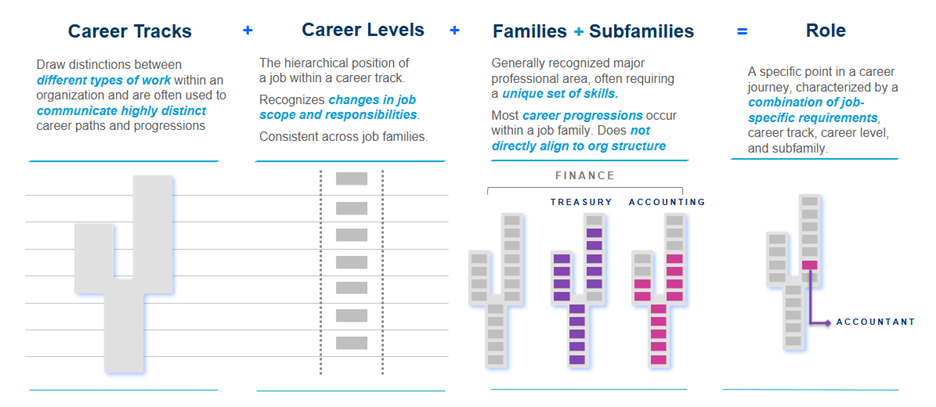
It’s important that you first understand the basics of job architecture. If the concept is entirely new to you, check out this resource on what job architecture is. Having an organized, internal structure of jobs within your healthcare organization involves categorizing roles based on similar attributes like job families, levels, and skills. Think of it as a clear map that defines how various roles in your healthcare organization are structured, how they relate to each other, and how they support your organization’s goals.
Why is it a priority for healthcare?
The healthcare industry is facing unprecedented change. From digital transformation and shrinking margins to workforce shortages and evolving patient expectations, your organization must be agile and strategic.
A strong job architecture helps you:
- Improve operational efficiency: Identify redundancies in roles and structures that drive up operational costs to help streamline operations and deliver greater efficiency and productivity.
- Proactively manage workforce needs: Understand where skills are concentrated and where gaps exist.
- Enhance employee engagement: Provide clear career paths and development opportunities.
- Ensure compliance and pay equity: Maintain transparency and fairness in compensation.
Did you know?
Mercer has the most reliable suite of healthcare compensation surveys as well as a comprehensive Clinical Pay Practices report to help you make decisions beyond pay. The survey is as national as it is hyper-local and covers a diverse range of healthcare settings, including children’s hospitals, teaching hospitals, dental, outpatient, and much more!
New in 2026! Over 30 jobs have been added to the healthcare survey this year and 41 jobs were revised to align with market descriptions and titles.
How job architecture benefits your healthcare organization
1. Clarifies expectations and career paths
Healthcare employees remain under pressure, in an environment where "lower confidence in career progression and declining belonging create a fragile equilibrium: employees continue to show up, but they are watching closely for signals that staying will lead somewhere" (2026 Inside Employees Minds). To address this, a clear job architecture that defines the skills, responsibilities, and levels needed for advancement is essential. When employees see a transparent pathway, they’re more motivated, engaged, and committed, which leads to a more dedicated workforce.
2. Supports core HR priorities
Job architecture underpins many HR functions, including:
- Rewards and pay equity: Ensures compensation is fair, consistent, and aligned with market standards by maintaining consistent definitions of jobs and levels, which then leads to efficient, accurate market pricing.
- Learning and development: Identifies skills gaps and guides targeted training by clarifying expectations at each level and path and clearly communicating them to employees and management.
- Performance management: Clarifies expectations and performance criteria across levels and paths, ensuring managers and employees are aligned.
- Talent acquisition and workforce planning: Helps identify the current talent and efficiently plan for future needs.
3. Enhances workforce flexibility and agility
In healthcare, needs can shift rapidly. New technology, policy changes, or patient demand can dramatically impact the skills and talent needed to meet regulations, patient needs, and overall objective. A flexible job architecture allows you to redeploy staff, create new roles, or adjust responsibilities quickly, keeping your organization responsive and competitive.
4. Supports compliance and risk management
Healthcare organizations face complex regulatory environments. Clear job structures help ensure compliance with pay transparency laws, prevent pay disparities, and reduce legal risks. They also streamline reporting and audits, saving time and resources, which is critical in a busy healthcare environment.
Job architecture is foundational in healthcare
Watch Megan Mckinnon talk about the importance of refreshing your job architecture.
A well-designed job architecture is a foundational element that can help you navigate industry changes, improve employee engagement, ensure compliance, and drive better business outcomes. It’s an investment in your organization’s future—one that pays dividends in workforce stability, operational efficiency, and patient care.
Mercer is well-versed in developing flexible job architecture in healthcare organizations. Our industry expertise and deep knowledge of the complexities of the healthcare talent strategy make us uniquely positioned to be your partner as you develop a job architecture for your workforce today and talent strategy of the future.
Call us today at 855-286-5302 or email surveys@mercer.com.
Interested in healthcare-related surveys to complement your job architecture?
About the Authors

Zoe Kost, Commercial Strategist
Serving Mercer as the Commercial Strategist for the Healthcare Industry, Zoe applies industry knowledge and experience with insights across workforce and organizational dynamics to support business growth and deliver integrated, practical solutions.

Megan Mckinnon, Senior Compensation Consultant
Megan is a Senior Principal with Mercer’s Atlanta Career team. Megan advises clients on a variety of talent and rewards topics including strategic pay and reward program design, competitive compensation assessment, incentive plans, job architecture, job evaluation and leveling, pay structure development, and program governance.