110 compensation leaders reveal their strategies for how they are tackling the 3% raise dilemma.
You’re in the thick of comp planning season right now, and the familiar constraint is as real as ever: merit budgets hovering around 3–3.5%. So how are you planning to make the most of it? We asked ~110 compensation practitioners across the US and Canada to weigh in, and their answers paint a clear picture of the challenges they are facing, and how they’ll attempt to address them.
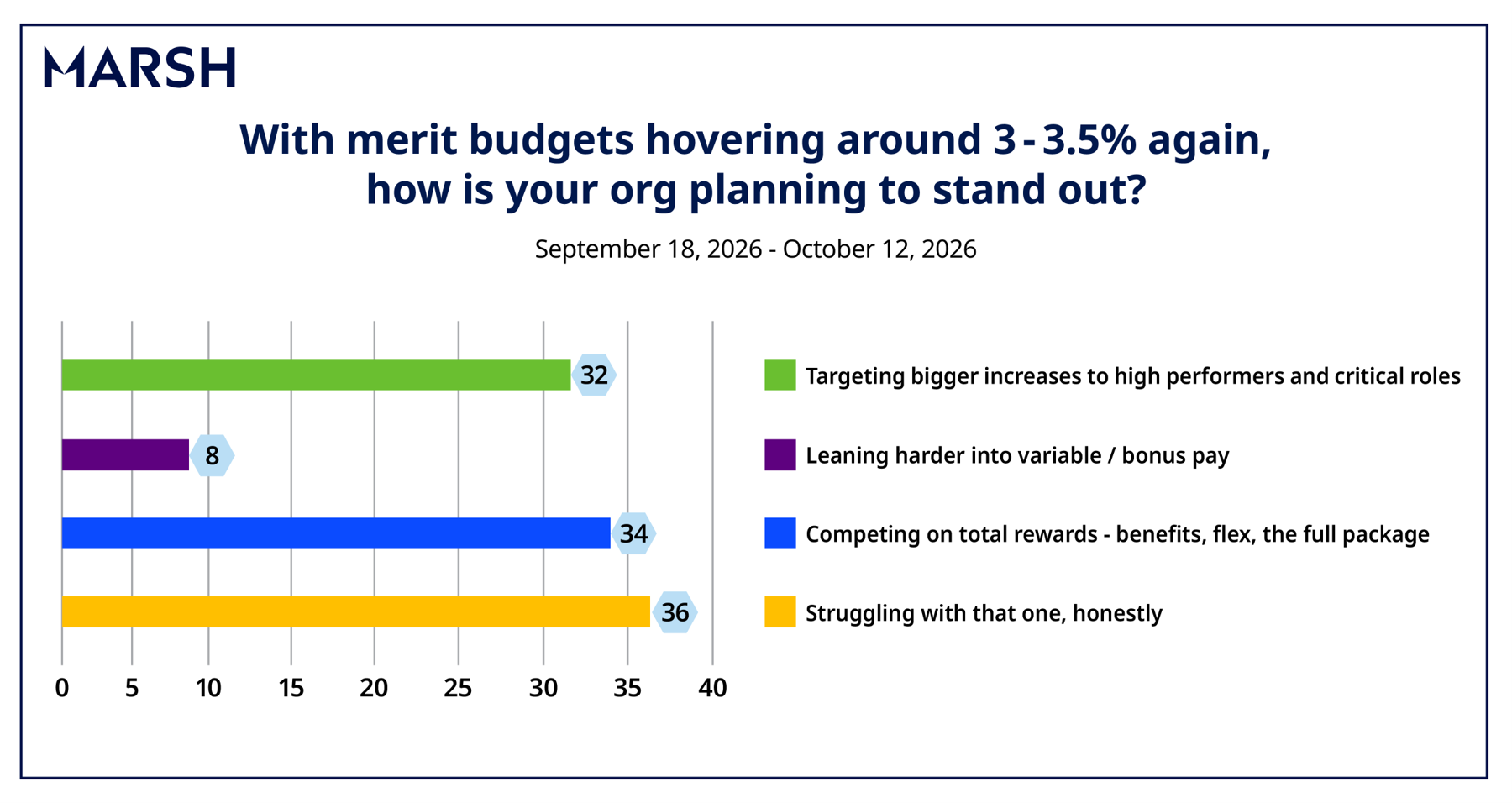
Responses from real compensation professionals
When we polled practitioners on how their organizations plan to differentiate in a constrained budget environment, four distinct strategies emerged:
1. Distributing bigger increases to high performers and critical roles (32%)
The largest group of survey participants—nearly one-third—is doing what works: concentrating their merit dollars where they matter most. This performance-based, role-focused approach lets you maximize impact even with a modest budget. It signals to your top talent that you’re paying attention to their contributions. You do have to be willing to eliminate increases for those who are not high achievers to meaningfully differentiate.
2. Struggling with that one, honestly (36%)
The second-largest group reveals a key insight: many organizations haven’t yet solved the 3–3.5% puzzle. If you’re in this camp, you’re not alone. This honest admission suggests that more practitioners are actively searching for answers than are confident in their current approach.
3. Shifting focus to total rewards—benefits, flex, the full package (34%)
A strong third of respondents are shifting the conversation beyond base pay. They’re leveraging health plans, flexible work arrangements, retirement benefits, and other total rewards elements to remain competitive. This calls your employee’s attention to your total rewards value proposition beyond the constraints of merit budget dollars.
4. Leaning harder into variable/bonus pay (8%)
A smaller but notable group is restructuring their reward mix, moving a larger share from fixed merit increases into variable compensation. This approach protects the organization during downturns while maintaining upside potential when performance allows.
What this tells you about the market
These findings reflect the reality many of you are living: the low-single-digit merit budget is now structural, not cyclical. For three consecutive years, US organizations have maintained discipline around 3.1–3.2% actual merit increases, according to Mercer’s latest QuickPulse data. That consistency signals confidence—but it also means you can’t rely on budget increases to solve talent challenges.
What’s encouraging is the diversity of approaches. The fact that no single strategy dominates (the highest is just 36%) suggests that there’s no one-size-fits-all answer. Instead, leading organizations are mixing tactics: they’re targeting performance more surgically, expanding their total rewards story, and being honest about the fact that traditional merit planning needs to evolve.
Three things to consider for your planning
- If you’re in the 36% still figuring this out, now is the time to choose your approach. Whether you lean into performance differentiation, total rewards, or variable pay, having a clear strategy—and confidently communicating it to leaders and employees—builds credibility.
- Performance differentiation isn’t just about budget math; it’s about messaging. If you’re concentrating increases on high performers and critical roles, make sure employees understand why. Transparency here reduces turnover risk among those you most want to retain.
- Total rewards has become a genuine differentiator. If benefits, flexibility, career development, or other non-cash elements are part of your story, make sure they’re woven into your external employer brand and your internal talent conversations. Many practitioners are quietly winning here.
We’ve broken down how all of this fits into current compensation trends and how you can use it through compensation planning as you head into 2027.
The bottom line
Compensation planning season is never simple, but you’re in good company. Real practitioners across the US are testing and learning just like you are. The good news: the data shows that focused, intentional strategies—whether performance-driven, total rewards-focused, or hybrid—are already in motion. The question isn’t whether you can stand out on 3–3.5%, it’s which combination of levers you might feasibly pull to make it work for your organization.
Does your annual compensation planning strategy need a tune up? Give Marsh a call to find the insights you need at 855-286-5302 or email surveys@mercer.com.
About the author

Rebecca Hall, Principal
Rebecca spent much of her career working in compensation in various corporate roles then transitioning to consulting with Mercer. Her current role, as the Content Leader for imercer.com, allows her to leverage her knowledge of human resources and talent strategy to create materials supporting Mercer’s Products & Services in North America.