Annual compensation planning season is here, and like your counterparts in the US, you’re facing the same fundamental reality: merit budgets hovering around 3–3.5%.
For Canadian organizations, the question isn’t whether to live within these constraints, it’s how to win talent and ensure engagement despite them. We surveyed ~110 compensation practitioners across the US and Canada to understand how organizations are approaching this challenge. Take a look at what they told us.
Responses from real compensation professionals
Organizations need to plan to differentiate
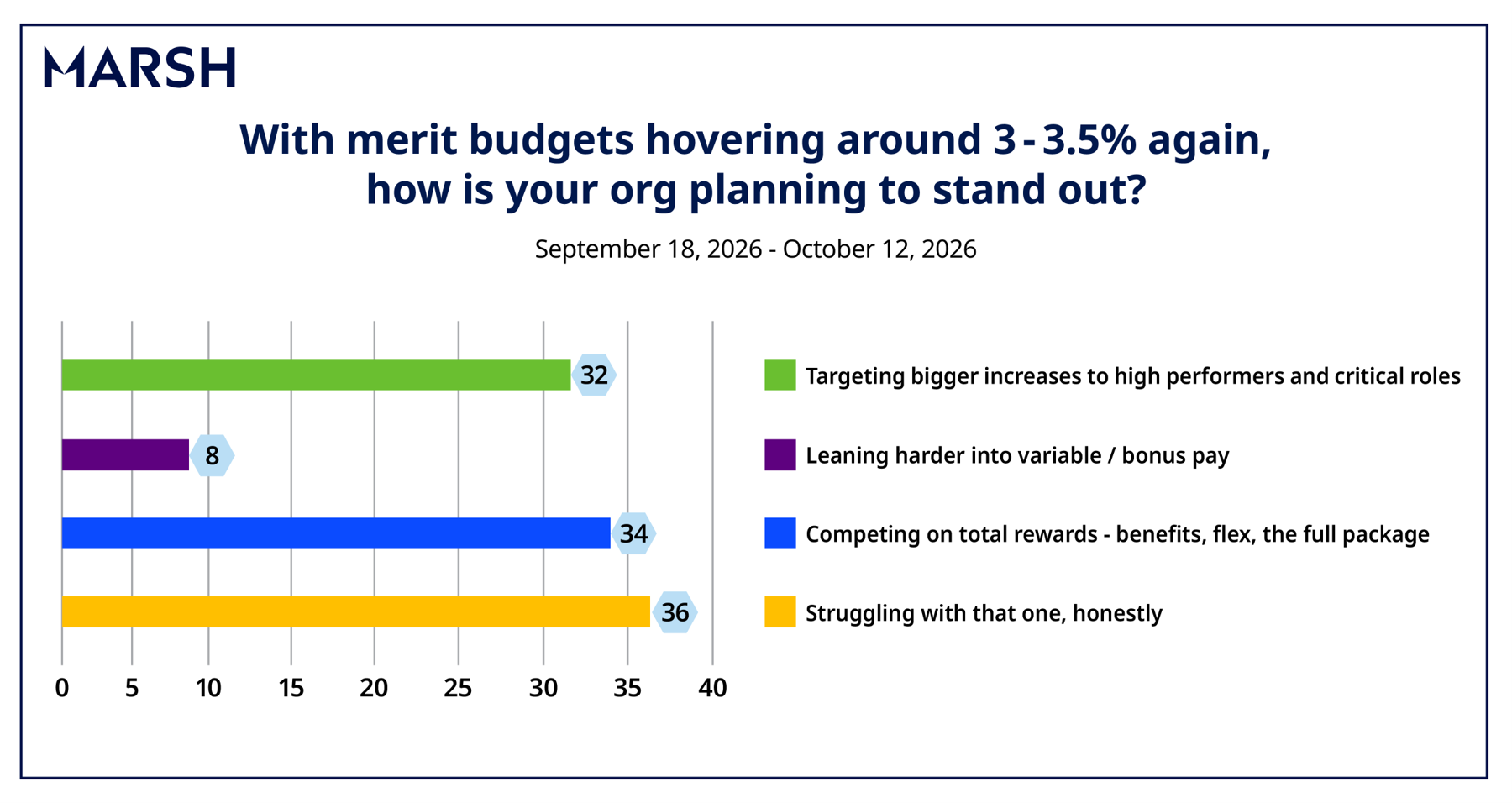
When asked how their organizations are planning to stand out in a flat budget environment, respondents fell into four different categories:
1.Targeting bigger increases to high performers and critical roles (32%)
Nearly a third of organizations are concentrating their merit dollars on the people and roles that matter most to business strategy. This precision-focused approach maximizes your competitive impact. For Canadian organizations managing smaller absolute budgets, this targeted model can be especially effective—you’re not trying to move the needle broadly, you’re investing strategically.
2. Struggling with that one, honestly (36%)
More than a third admitted they’re still working through the puzzle. That’s actually an important finding: it means you’re not behind or alone. In fact, it reflects that many Canadian organizations are actively experimenting, learning, and refining their approaches rather than settling on one tactic. If you’re in exploration mode, you have company and opportunity.
3. Competing on total rewards—benefits, flex, the full package (34%)
A strong third of respondents are broadening their competitive story beyond base salary. They’re emphasizing benefits (including health and wellness), workplace flexibility, professional development, and other elements that matter to Canadian talent. This is particularly resonant in Canada, where employees increasingly value balance and purpose alongside compensation.
4. Leaning harder into variable/bonus pay (8%)
A smaller group is rebalancing their pay mix, shifting weight toward variable compensation and performance bonuses. This approach provides flexibility and links reward more directly to business outcomes—a pragmatic choice in a constrained environment.
What the Canadian market is telling you
In Canada, the 3–3.5% merit budget is now a baseline expectation, not a temporary dip. Mercer’s latest QuickPulse data confirms that Canadian organizations are projecting around 3.0% in merit increases, reflecting consistent, disciplined compensation management. That three-year consistency matters: it tells the market you’re stable and strategic, not erratic.
What stands out here is how much diversity of approach exists even within the constraints. The fact that the top strategy represents only 36% of responses means there’s no single 'right' answer. Leading Canadian organizations are choosing their levers strategically—focusing on performance, highlighting total rewards value, or testing new pay structures, depending on their talent strategy and business priorities.
For Canadian practitioners, the opportunity is clear: low-single-digit merit budgets are structural. The organizations that win are those that have moved beyond asking 'How do we fix the budget?' and started asking 'What’s our strategic approach to attracting and retaining talent within this reality?'
Three priorities for your planning
- Make a strategic choice and own it. Whether you’re concentrating on performance, expanding total rewards, or adjusting your pay mix, clarity matters. Communicate your approach to leaders and employees so they understand the logic behind it. Ambiguity costs you more than a modest budget ever could.
- Amplify your total rewards story. In the Canadian market, benefits, flexibility, career growth, and purpose resonate strongly. If these elements are part of how you compete, make sure they’re visible and valued in your employee communications, recruitment materials, and manager conversations.
- Be transparent about budget realities with your managers. If your merit budget is 3.0% and your managers understand that, they can plan accordingly and have better conversations with their teams about what merit increases represent this year. This candor builds credibility and reduces unrealistic expectations.
Moving forward in this new reality
Comp planning on a 3.0% budget is the new reality in Canada, and you’re navigating it the same way hundreds of other practitioners are: thoughtfully, strategically, and with multiple levers in play. The practitioners who are most successful aren’t those with the biggest budgets—they’re the ones who’ve moved beyond budget constraints to build a deliberate, authentic talent strategy. That’s your opportunity this season.
Does your annual compensation planning strategy need a tune up? Give Marsh a call to find the insights you need at 855-286-5302 or email surveys@mercer.com.
About the author

Rebecca Hall, Principal
Rebecca spent much of her career working in compensation in various corporate roles then transitioning to consulting with Mercer. Her current role, as the Content Leader for imercer.com, allows her to leverage her knowledge of human resources and talent strategy to create materials supporting Mercer’s Products & Services in North America.